Detailed Guide to the Procedures and Process of Selling a House to a Buyer Using a Bank Loan
Bán nhà cho khách hàng vay vốn ngân hàng là hình thức giao dịch 3 bên phổ biến hiện nay nhưng đòi hỏi chủ nhà phải nắm vững quy trình pháp lý. Bài viết hướng dẫn từng bước từ đặt cọc, công chứng, giải ngân phong tỏa đến sang tên đổi sổ nhằm giúp bên bán nhận đủ tiền nhanh chóng và an toàn tuyệt đối.
In today's real estate market, as many as 60% – 70% of home buyers choose to use financial leverage from credit institutions. For sellers, reaching this customer group helps expand the opportunity to quickly liquidate assets at a good price.
However, quite a few homeowners feel hesitant and worried: "Will I get paid after the transfer is notarized?", "How long does the bank's blocked-account disbursement take before I can withdraw the money?", "What happens if the buyer's loan is rejected?". To ensure the transaction is transparent and safe and to minimize legal risks, below is a comprehensive guide to the latest procedures for selling a house to a buyer using a bank loan.
Bản Chất Giao Dịch Bán Nhà Cho Người Mua Vay Ngân Hàng (Giao Dịch 3 Bên)
Giao dịch bán nhà có sự tham gia của bên thứ ba là ngân hàng được gọi là giao dịch 3 bên (Bên bán – Bên mua – Ngân hàng tài trợ vốn). Trong đó, tài sản bảo đảm cho khoản vay của bên mua chính là căn nhà chuẩn bị chuyển nhượng hoặc một tài sản độc lập khác.
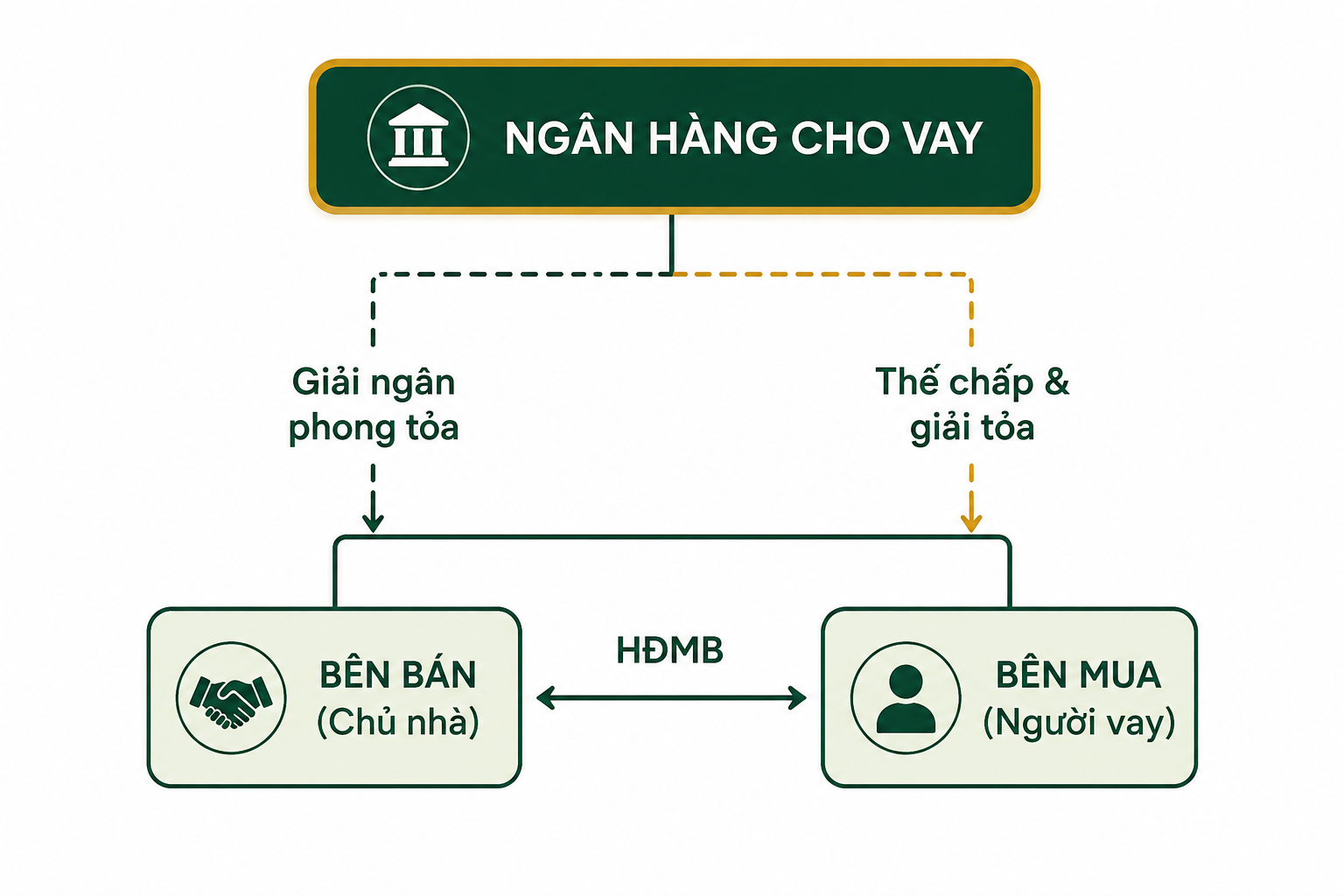
Currently, commercial banks apply 2 main disbursement methods:
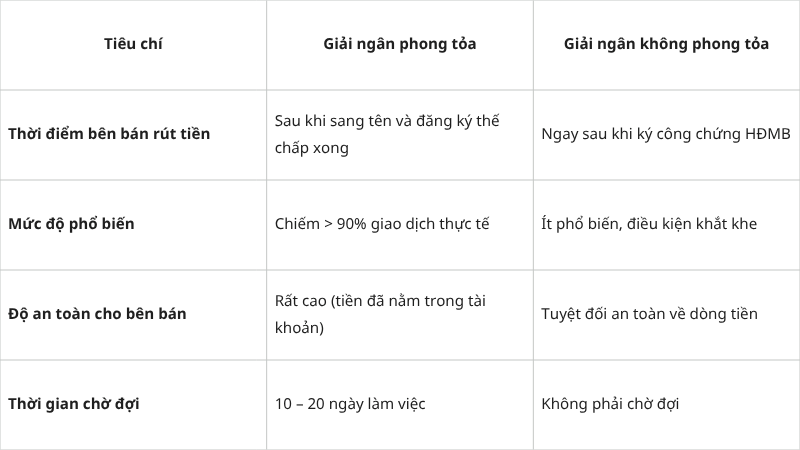
Blocked disbursement (the most common & safest method)
Right after both parties sign the Sale and Purchase Agreement at the Notary Office, the bank disburses the entire loan amount into the seller's payment account opened at that same bank. However, this amount will be temporarily blocked. The seller can only withdraw cash or transfer the money after the ownership transfer and pink book re-issuance procedures are completed and the bank has finished registering the property mortgage at the Land Registration Office.
Non-blocked disbursement
The seller receives and can use the entire amount right after the notarization, without waiting for the ownership transfer and pink book re-issuance to be completed. However, this method only applies when the buyer uses another existing collateral asset (such as another property or a savings book) or when the bank has a special credit guarantee policy with absolute reliability
Documents to Prepare for the Transaction
To make the appraisal and disbursement approval process fast, both parties need to coordinate and prepare the following complete list of documents:
Seller's Side (Homeowner):
- Certificate of land use rights, house ownership rights and other assets attached to land (original pink book / red book).
- Chip-based citizen identity card of the owner (and of the spouse if it is jointly owned property).
- Marriage certificate (or a marital status certificate if single).
- Cadastral map extract / current land and house survey drawing (if required by the local authority or the bank).
- Registration fee payment notice and annual land and housing tax receipts.
Buyer's Side:
- Personal legal documents (citizen ID card, marriage registration certificate / single status certificate).
- Documents proving financial capacity and income sources (labor contract, salary statements, business license, property lease contracts, etc.).
- Loan purpose documents: draft Sale and Purchase Agreement, property deposit receipt.
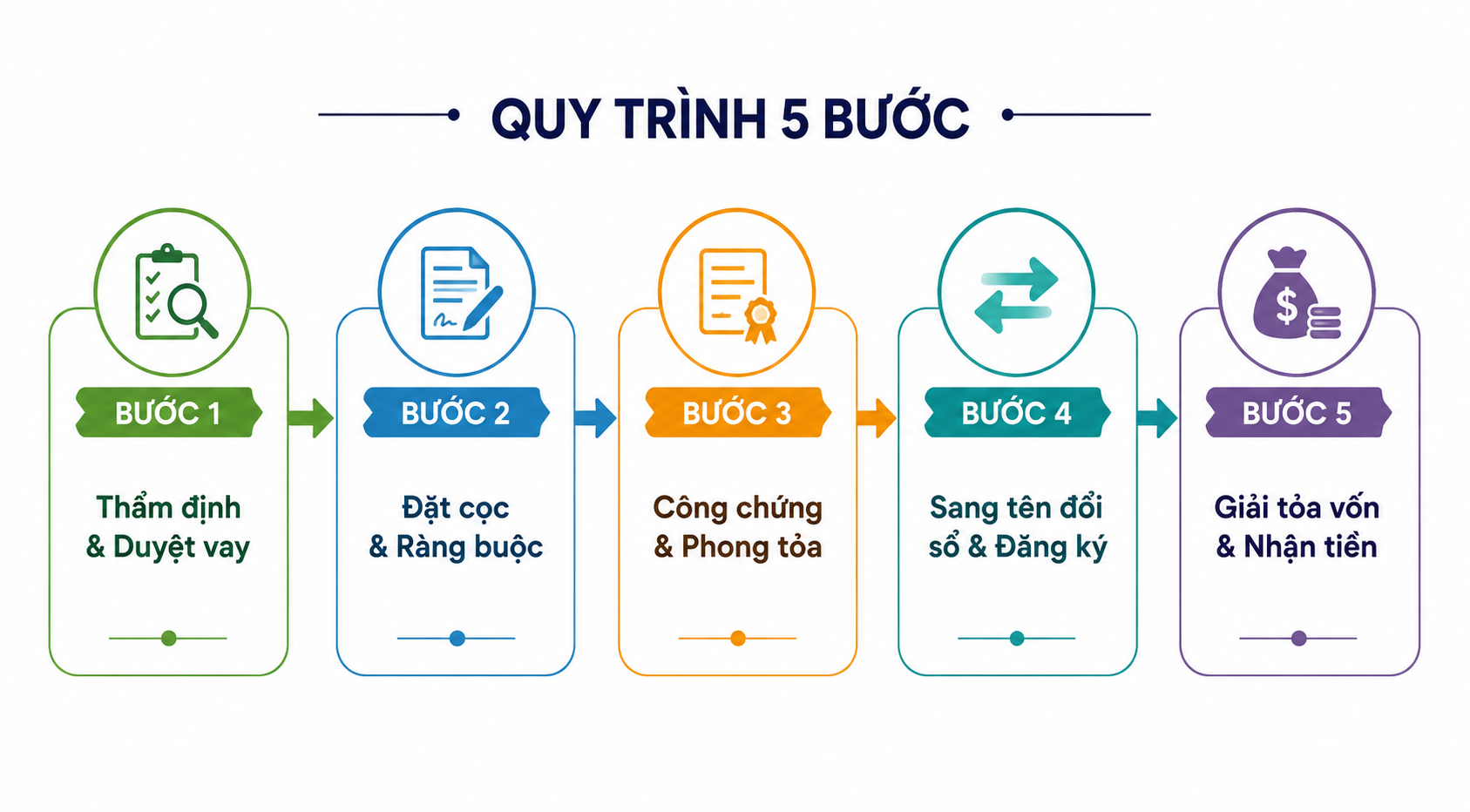
5-Step Process for Selling a Home to a Buyer Using a Bank Loan (Property Not Mortgaged)
If your home has its pink book kept at home (with no debt or bank mortgage), the transaction proceeds sequentially through 5 standardized steps:
Step 1: The bank conducts an on-site appraisal & issues a Credit Approval Notice
Before proceeding with the transaction, the buyer submits a copy of the pink book and personal documents to the bank for price appraisal and zoning verification.
- The bank sends a valuation officer to inspect the property in person.
- After reviewing the buyer's financial documents, the bank will issue a Credit Approval Notice (or a conditional loan commitment). This document states: the approved loan amount, the financing ratio and the disbursement conditions.
Expert advice: The seller should only proceed to the next steps after seeing an official Credit Approval Notice bearing the bank's red seal. Never transact based solely on verbal promises from the buyer or a credit officer.
Step 2: Sign the deposit agreement with seller-protection clauses
Once the loan notice has been issued, both parties sign the deposit agreement (typically 5% – 10% of the property value). In the deposit agreement, the seller should add the following key clauses:
- State clearly the buyer's own capital and the amount of the bank loan.
- The specific deadline by which the buyer must complete the loan procedures and the notarized signing.
- The responsibilities of each party if the loan is not disbursed on time or the appraised value falls short.
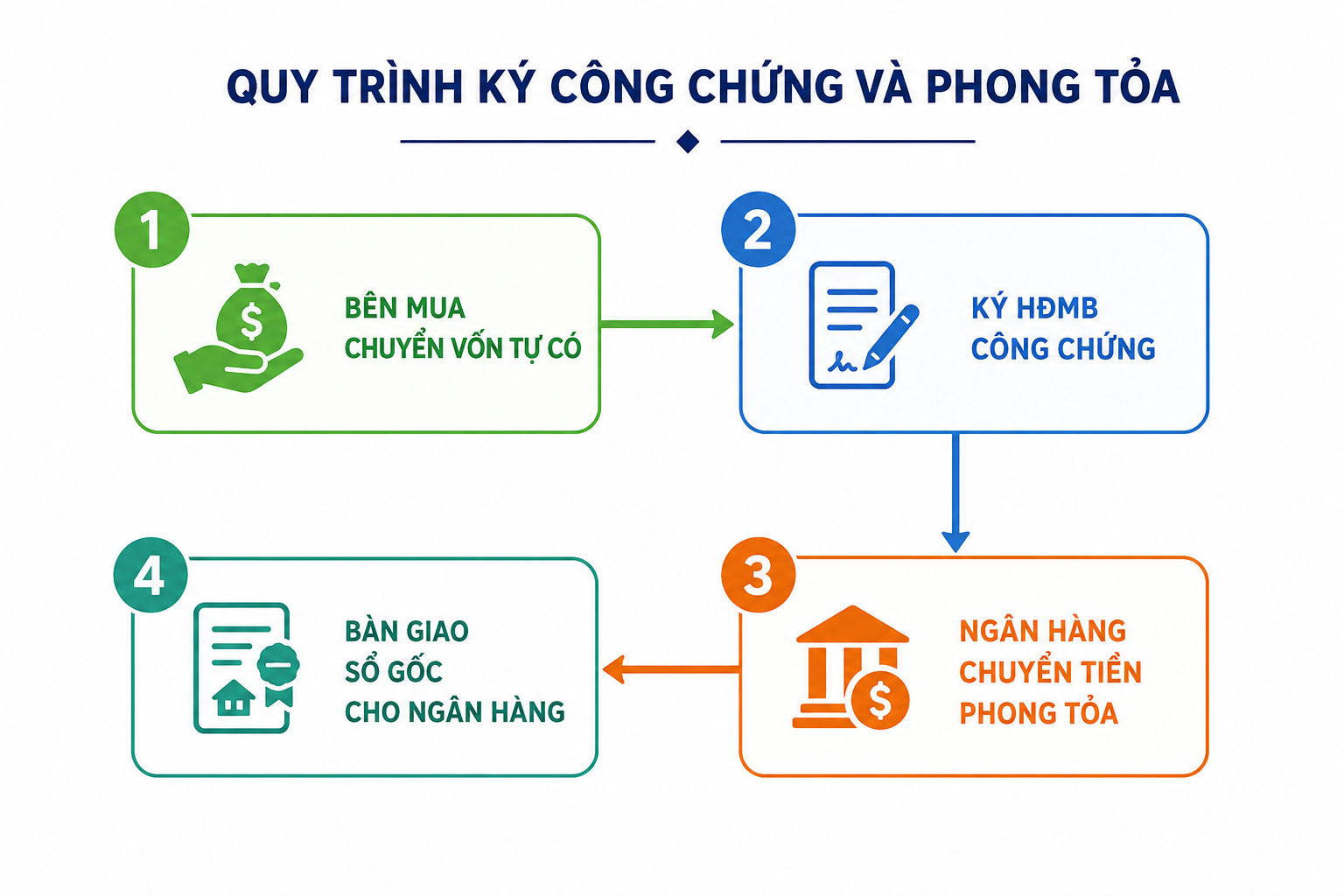
Step 3: Sign the notarized sale and purchase agreement & the bank makes a blocked disbursement
On the notarization date, all three parties (the seller, the buyer and the bank's credit officer) attend the notary office:
- Payment of own capital: The buyer pays the seller the entire remaining amount of own capital (in addition to the portion financed by the bank).
- Signing the sale and purchase agreement (SPA): Both parties sign the SPA transferring land use rights and assets attached to the land in accordance with the current Law on Notarization.
- Signing the credit agreement & mortgage: The buyer signs the credit agreement and the mortgage agreement over the asset acquired with the loan with the bank.
- Blocked disbursement: The bank transfers the loan proceeds to the seller's bank account and activates an account block. The seller receives a credit notification SMS (SMS Banking) and the bank's credit advice.
- Handover of the original pink book: After confirming that the funds have arrived in the blocked account, the seller hands over the original pink book together with the notarized documents to the bank's representative to carry out the title transfer procedures.
Step 4: Fulfil tax obligations & submit the title transfer application
The bank's representative or an authorized legal service provider will bring the entire file to the Land Registration Office / district- or city-level One-Stop Department to:
- Declare and pay personal income tax (2% of the transfer value) and registration fee (0.5%).
- Register the change in land use rights (update the buyer's name on page 4 of the pink book or issue a new book in accordance with the Land Law).
Step 5: Register the Secured Transaction, Release the Block & Receive the Funds
Once the pink book has been updated with the buyer's name:
- The bank registers the secured transaction (mortgage) at the Land Registration Office.
- The bank keeps the original pink book and issues a notice releasing the blocked account to the seller.
- The seller officially gains full ownership and the right to use and withdraw the payment from the account.
Process for Selling a Property Whose Pink Book Is Mortgaged at a Bank
If the seller's property is mortgaged at Bank A, and the buyer wants to take out a loan at Bank B (or at the same Bank A), the process is more complicated and is handled in 2 ways:
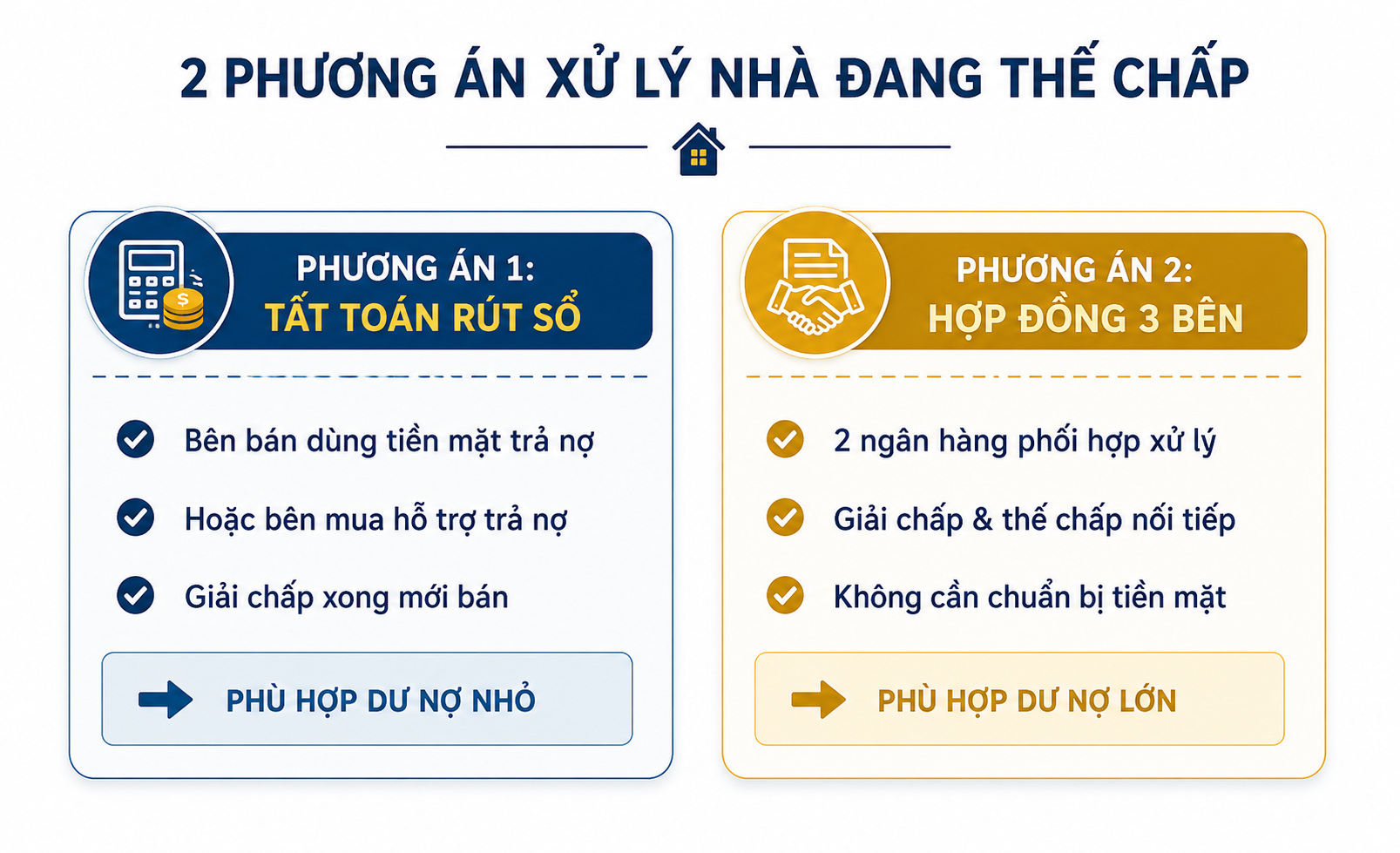
Option 1: Pay off the loan first to retrieve the pink book
- Method 1 (the seller arranges the funds): The owner uses savings or borrows from relatives to pay off the outstanding balance at Bank A, completes the procedure to remove the mortgage (release of mortgage) and retrieves the book, then follows the standard 5-step process.
- Method 2 (the buyer pays a deposit equal to the outstanding balance): Both parties go to the bank holding the book to pay off the seller's loan, receive the red book, and go to the notary office to execute the sale and purchase agreement on the same day.
Option 2: Sequential transaction between two banks (3-party debt transfer process)
If the bank debt is too large and neither party has the cash on hand, Bank A and Bank B will coordinate to sign an inter-bank agreement:
- The buyer deposits their own capital into a blocked account at Bank B.
- Bank B commits to disbursing the payment to Bank A to pay off the owner's debt.
- Bank A releases the mortgage and hands the pink book directly to an officer of Bank B.
- Both parties sign the notarized SPA, and Bank B proceeds with the transfer of ownership and registration of the new mortgage.
Biggest Risks Sellers Should Note & How to Avoid Them
Understanding the legal "traps" below will help sellers fully protect their financial interests:
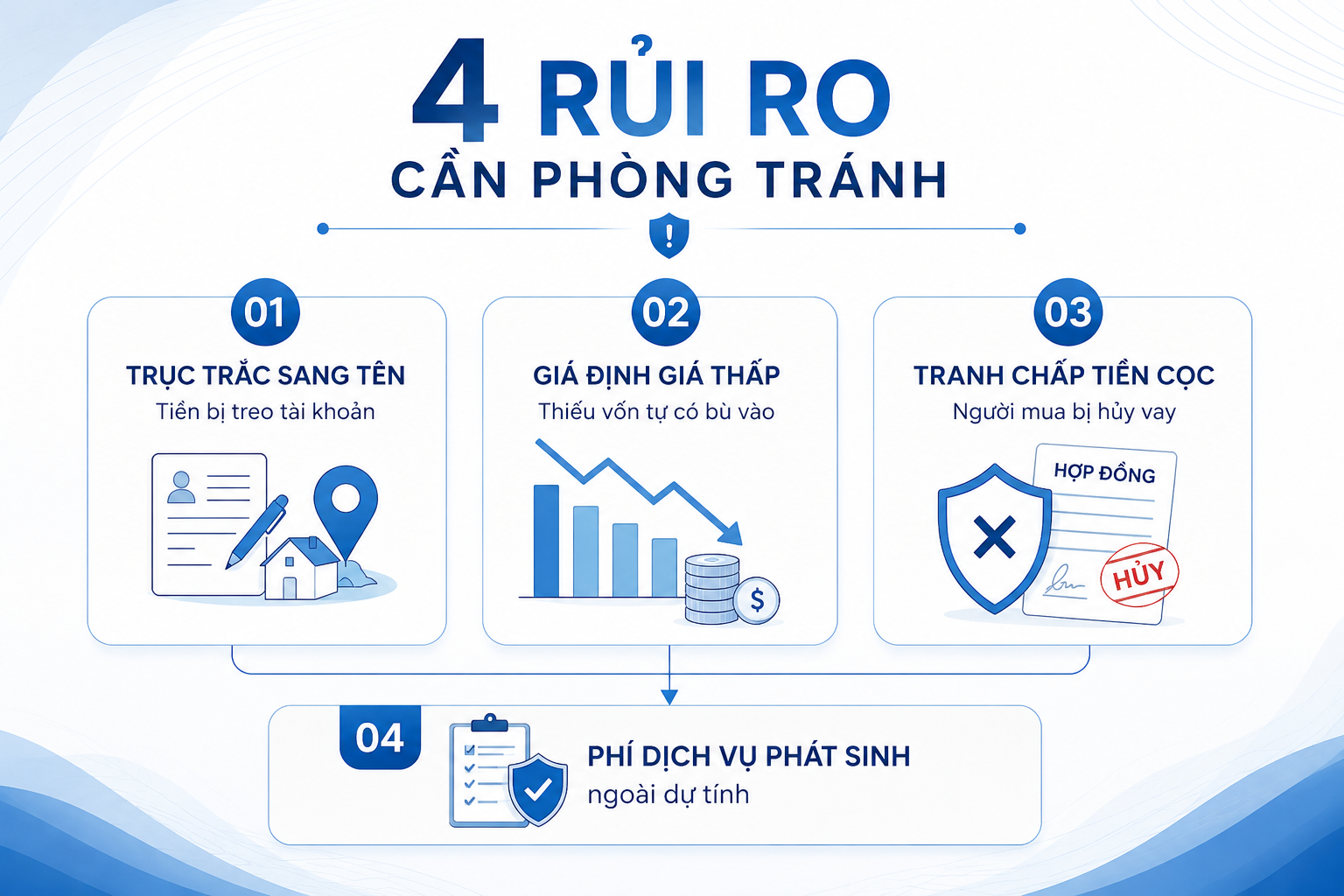
Risk of problems during the ownership transfer leaving funds "stuck" in the blocked account
If the property's actual area differs from the red book, there is a boundary dispute, or the map sheet/parcel number has changed without being updated, the ownership transfer application may be returned. During this time, the money in the seller's account remains blocked and cannot be withdrawn.
- Solution: Carefully check the legal status, zoning and land cadastral extract before accepting a deposit.
The bank's valuation is lower than the actual sale price
In many cases, the bank values the property lower than the price agreed between the two parties, which reduces the loan amount. If the buyer does not have enough equity to cover the difference, the transaction is at risk of falling through.
- Solution: Require the buyer to complete a preliminary valuation before signing the official deposit agreement.
Deposit forfeiture clause if the bank refuses to lend
The deposit agreement should make clear that if the bank refuses the loan because the buyer failed to provide sufficient financial documents, the buyer forfeits the deposit. Conversely, if the seller's house does not meet mortgage requirements due to legal defects, the seller must refund the deposit.
Costs incurred during the blocked-account disbursement process
The seller needs to agree clearly with the buyer and the bank on fees: notarization fees, secured transaction registration fees, interbank transfer fees and blocked account maintenance fees (if any).
Conclusion
Thực hiện thủ tục bán nhà cho người mua vay ngân hàng hoàn toàn an toàn và nhanh gọn nếu bạn nắm vững quy trình giao dịch 3 bên và tuân thủ đúng các nguyên tắc kiểm soát dòng tiền giải ngân phong tỏa. Việc hợp tác với các chuyên viên tín dụng uy tín cùng đơn vị tư vấn bất động sản chuyên nghiệp sẽ giúp bạn rút ngắn thời gian giao dịch và đảm bảo dòng tiền về tài khoản suôn sẻ nhất.
If you need support with legal due diligence on a property, connecting with a home loan package with preferential interest rates, or advice on safe real estate transactions in Ho Chi Minh City, please contact:
- Website: Đức Hưng Group
- Hotline/Zalo: 0939.720.039
- Fanpage: Đức Hưng Group Real Estate or Đức Hưng Group
- Address: TM21 Lavita Charm, Street No. 1, Truong Tho Ward, Thu Duc City, Ho Chi Minh City
Frequently Asked Questions (FAQ)
How long does it take to receive cash when selling a house to a buyer with a bank loan?
Typically, the total time from notarized signing until the seller can withdraw the money ranges from 10 to 15 working days (depending on the processing time for land registration changes in each locality).
Does money in the blocked account earn interest?
Yes. While the money is blocked at the bank, it still earns the demand deposit interest rate according to each bank's fee schedule.
Should I let the buyer transfer the title first and receive the bank's payment afterwards?
Absolutely not! This is an extremely dangerous risk. The seller should only hand over the original title book to the bank's representative after receiving a message confirming the funds have arrived in the blocked account and a written conditional disbursement commitment from the credit institution.
What if the buyer does not sign the mortgage release documents after the title transfer?
All mortgage documents and authorizations for processing have been signed simultaneously by the bank and the buyer at the time the SPA is notarized. Therefore, the bank has full legal authority to complete the mortgage registration without depending on the buyer's subsequent cooperation.