Tighter rules on off-plan home transfers: experts worry about liquidity gridlock, speculation still hard to eliminate
Proposals to tighten, or even ban, the transfer of sale and purchase agreements for future-formed housing are sparking debate. Experts worry about reduced liquidity and risks for buyers.

Debate over tightening transfers of future-formed housing
On 02/11/2026, two major newspapers published opinions on moves to tighten the transfer of sale and purchase agreements for future-formed housing, also known as off-plan homes. According to VnExpress, the market could face a liquidity gridlock if this policy is tightened. CafeF cited experts who worry that banning transfers of this type of agreement may not eliminate speculation and could even increase risks for home buyers.
The articles show that the issue is still at the policy discussion stage. Buyers should follow official information from the regulatory authorities rather than treat this as a regulation already in effect.

Two groups of concerns raised
The first group concerns liquidity. When investors and buyers can no longer easily transfer their purchase rights before receiving the home, secondary transactions may slow down. This is why VnExpress raised the risk of a market liquidity gridlock.
The second group concerns the goal of curbing speculation. According to CafeF, experts argue that banning transfers does not always address the root cause of speculation. At the same time, they warn that home buyers may face additional risks if they lose the transfer channel when their financial circumstances change.
- Liquidity: transactions transferring purchase rights may decline if restrictions are tightened.
- Speculation: a ban may not address the underlying cause.
- Buyers: may face greater risk when they need to withdraw from a committed purchase.
Perspective for apartment buyers and renters
For end-user buyers, carefully weighing financial capacity before signing an off-plan purchase agreement becomes more important, since the ability to transfer it later may be restricted if the policy is tightened. For investment buyers, exit plans need to account for a scenario with a narrower transfer channel.
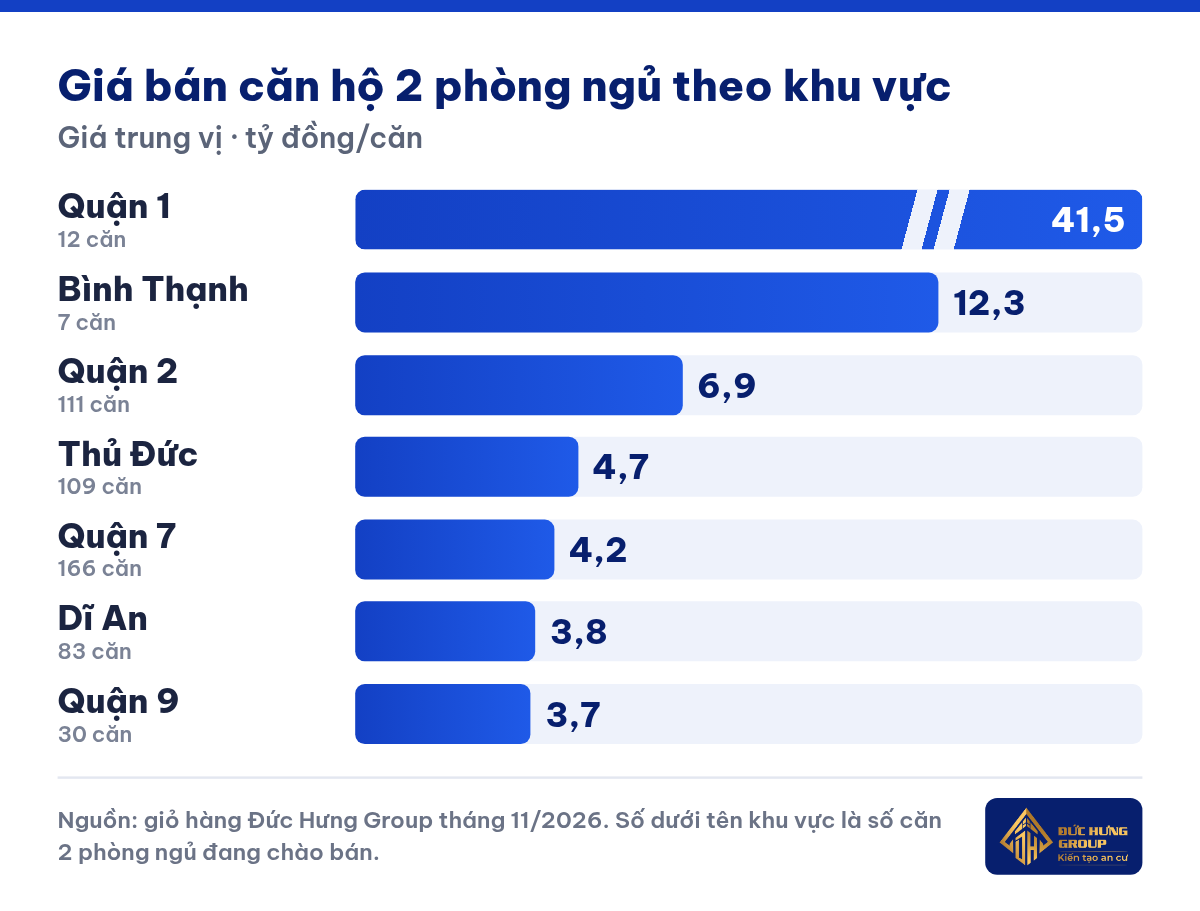
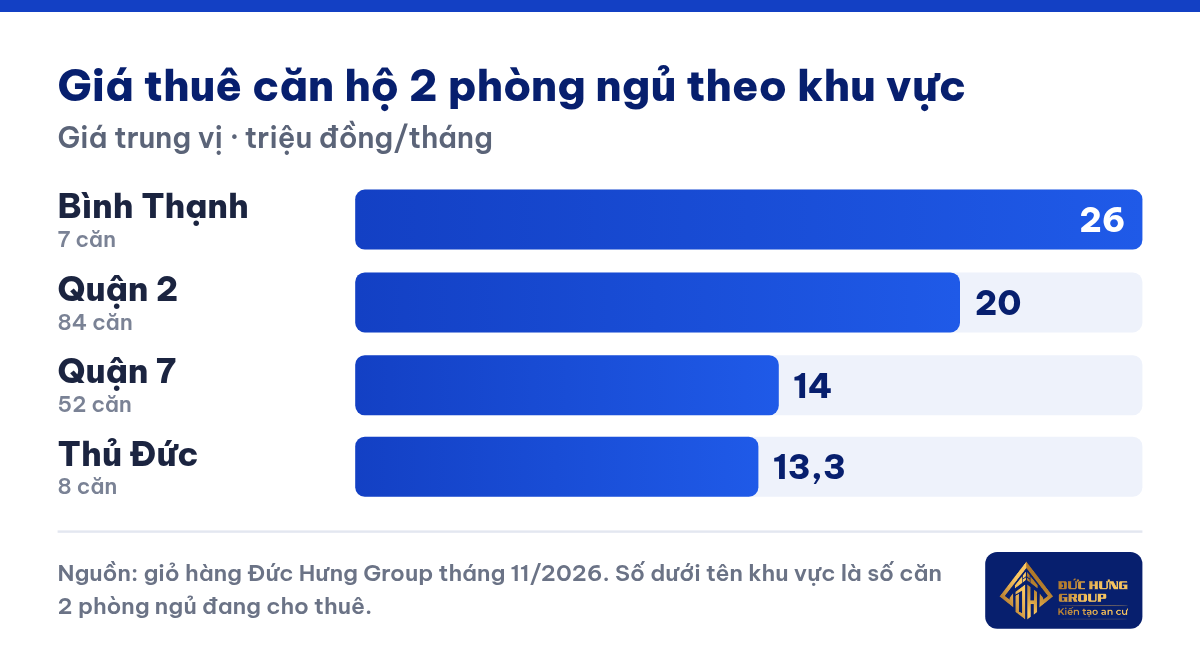
As for demand for renting and buying completed homes, Đức Hưng Group's available-unit data for November 2026 for 2BR apartments is as follows. District 2 has 130 units for rent with a median rent of 20 million VND/month, and 212 units for sale with a median price of 6.9 billion VND. District 7 has 87 units for rent, with a median rent of 14 million VND, and 269 units for sale, with a median price of 4.2 billion VND. Thu Duc has 15 units for rent with a median price of 13.3 million VND, and 175 units for sale with a median price of 4.7 billion VND. Binh Thanh has 21 units for rent with a median price of 26 million VND, and 43 units for sale with a median price of 12.3 billion VND.
In Di An, there are 103 units for sale with a median price of 3.8 billion VND. District 9 has 79 units for sale, with a median price of 3.7 billion VND. District 1 has 20 units for sale, with a median price of 41.5 billion VND. These three areas do not yet have enough rental data to calculate a median price. These are Đức Hưng Group's available-unit figures, not market-wide statistics.
- Off-plan buyers: prepare finances through to the handover date, and do not rely on being able to resell the agreement.
- Those who need to move in right away: can also compare completed apartments, where transactions do not depend on a contract transfer mechanism.
- Renters: check rent levels by district before deciding.
What to watch next
Buyers and investors should follow the official content of the regulation, its scope of application and its effective date if the policy is issued. Before signing an agreement, read the transfer clauses and payment schedule carefully. Contact Đức Hưng Group for advice tailored to your specific needs.
Frequently asked questions
Has the ban on transferring off-plan home sale and purchase agreements taken effect yet?
The articles dated 02/11/2026 only present opinions and concerns about the move to tighten regulations, and do not indicate that this is a regulation already in effect. Buyers should follow official information from the regulatory authorities.
Will tightening transfers definitely prevent speculation?
According to CafeF, some experts argue that banning transfers does not eliminate speculation and may even increase risks for home buyers.