Amended Housing Law Draft Tightens Resale of Social Housing After 5 Years: Key Points
The Government Office has asked the Ministry of Construction to report clearly on the rule for reselling social housing after 5 years. The draft proposes allowing resale only to people eligible to buy social housing.

New directive from the Government Office
According to CafeF and Dân trí, on 15/11/2026 the Government Office issued Notice 586/TB-VPCP, conveying the conclusions of Standing Deputy Prime Minister Phạm Gia Túc on the draft Law on Real Estate Business (amended) and the Law on Housing (amended). The Deputy Prime Minister asked the Ministry of Construction to report clearly on the content of reselling social housing after 5 years before finalizing the dossier for submission to the National Assembly.
Also according to CafeF, the Minister of Construction must take responsibility for the progress and quality of the draft, with the requirement that "policy profiteering must absolutely not be allowed to occur". According to Dân trí, besides the resale issue, the Ministry must also report on other matters.
- The obligation to set aside a social housing fund in commercial housing projects.
- Incentives for rental housing not funded by State capital.
- Resettlement housing.
- Regulations on notarization.

What the draft changes compared with the 2023 Housing Law
According to CafeF, the 2023 Housing Law allows buyers to resell social housing at market-based terms to people in need after 5 years from the date of full payment and once the ownership certificate has been issued. The amended draft narrows this scope: after 5 years, a home that already has an ownership certificate may only be resold to people eligible to buy social housing.
The 5-year milestone is counted from the date the home purchase price is paid in full, not from the contract signing date or the handover date. The main points of the draft are as follows:
- During the first 5 years, buyers may only sell to the developer or to people eligible to buy social housing, at a price no higher than the price in the original contract (according to CafeF).
- For lease-purchase, those who no longer need the home may have to terminate the contract and return the home instead of freely transferring it after 5 years (according to VnExpress).
- When reselling after 5 years, the seller does not have to pay land use fees and pays income tax as prescribed. For social housing that is a standalone house, 50% of the land use fee must also be paid (according to CafeF).
- The sale, lease-purchase and leasing of social housing is expected to be updated in the database on housing and the real estate market (according to VnExpress).
Resale price: cap it or let the parties negotiate
This is the point on which opinions still differ most. According to VnExpress, some opinions propose controlling the resale price after 5 years to curb speculation. However, in the Government's draft submission, the Ministry of Construction argues that capping prices is problematic because the Civil Code gives buyers the right to dispose of their own property. The drafting agency also warned that regulating the resale price could provoke a social backlash.
CafeF reports that the Ministry of Construction has reported an option of allowing resale only to eligible buyers, at a price agreed by the parties, and that Deputy Prime Minister Hồ Quốc Dũng supports this option. Meanwhile, Dân trí cites two other views: a National Assembly delegate proposed determining the resale price based on the original purchase price with an adjustment coefficient, and buyers may suffer losses from loan interest and ownership costs if the selling price is capped.
On the expert side, CafeF quotes lawyer Vi Văn Diện (Thiên Minh Law Co., Ltd.) as saying that if free transfer is allowed, social housing could become an ordinary investment and trading asset. The lawyer believes the proposed adjustment is well-founded but needs transparent mechanisms and procedures to protect owners' rights.
Transitional provisions and the National Assembly timeline
On transitional provisions, the two sources word things slightly differently. CafeF reports that contracts made before the new law takes effect will continue to be governed by the 2023 Housing Law when resold after 5 years, while contracts made from the effective date of the new law follow the new rules. VnExpress notes that social housing that has been fully paid for and has passed 5 years before the law takes effect is expected not to be restricted in terms of who may buy it. The final text will determine the details.
On progress, according to VnExpress, the National Assembly will consider and vote on the Housing Law (amended) on 21/11, and if passed, the law takes effect from 1/7/2027. Dân trí states that the two draft laws are expected to be considered for adoption in the second phase of the upcoming 2nd session. As of 20/11/2026, there is no information confirming the voting result, so the content above remains a draft and may change.
Perspective for apartment buyers and renters
If the option in the draft is adopted, social housing buyers need to be clear about whether they plan to live in the home long term or resell it. Social housing will be unlikely to become a short-term speculative channel, because during the first 5 years the selling price is capped at the original contract price and afterwards buyers can only sell to eligible people. Buyers using loans should also carefully calculate loan interest and ownership costs, a concern raised by Dân trí. Those who already own or have signed a contract should follow the transitional provisions to know which rules apply to them.
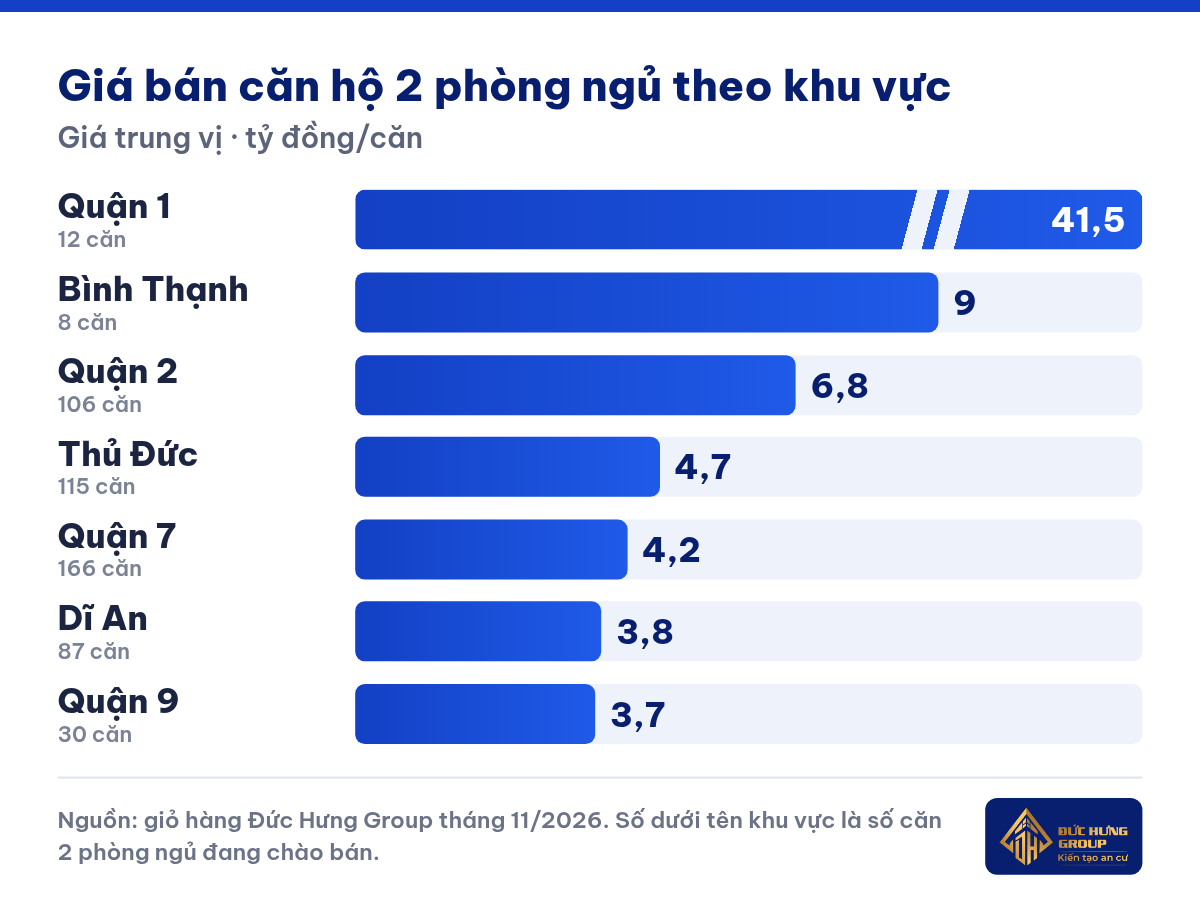
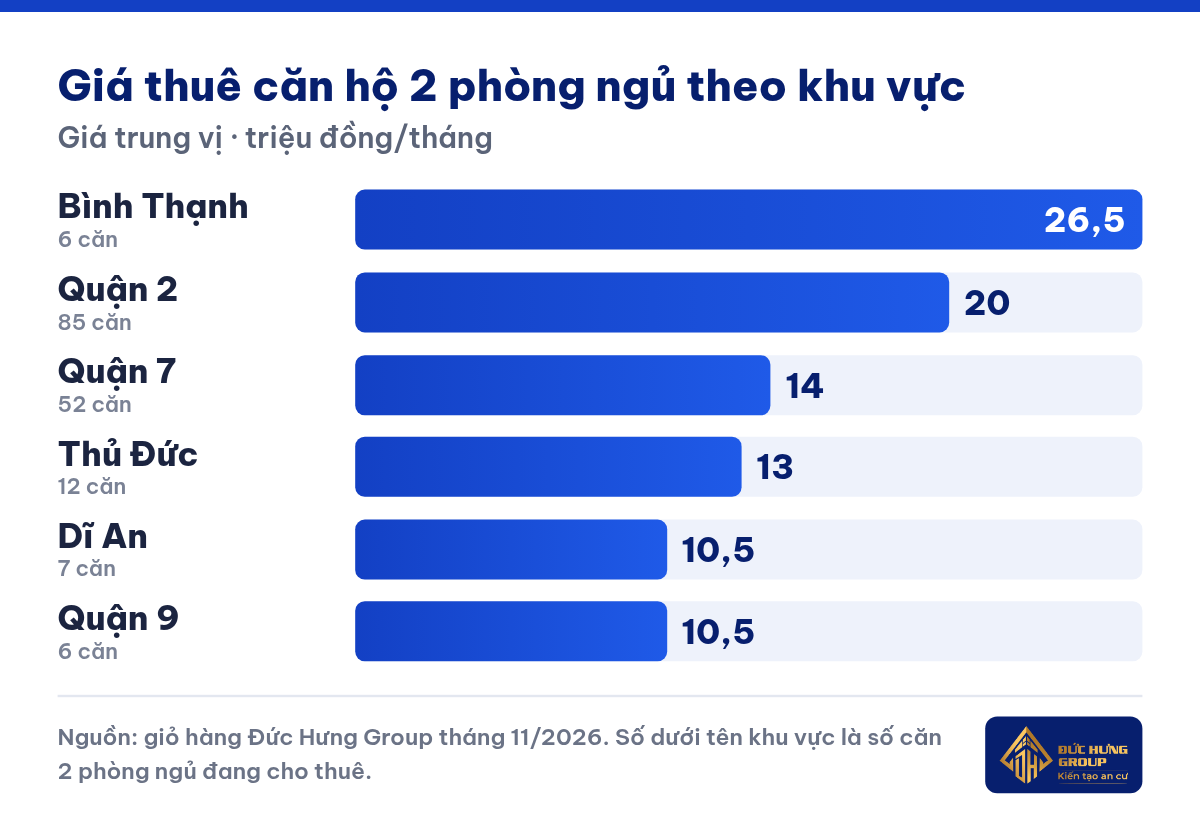
For those looking for commercial apartments, these rules do not apply directly. For reference on market levels, Đức Hưng Group's November 2026 available-units data shows median sale prices for a 2-bedroom unit of about 4.2 billion VND in District 7, 4.7 billion VND in Thu Duc, 3.8 billion VND in Di An and 3.7 billion VND in District 9. Median rents for a 2-bedroom unit are about 14 million VND/month in District 7, 13 million VND in Thu Duc, and 10.5 million VND in Di An as well as District 9. This is data on commercial apartments in Đức Hưng Group's available units, not social housing, and does not reflect the direct impact of the draft.
Interested readers should follow the voting result and the content of the law as adopted. For advice on the right choice between renting, buying and the various apartment segments, please contact Đức Hưng Group for consultation.
Frequently asked questions
After 5 years, to whom may social housing buyers sell under the draft?
According to CafeF, the draft proposes that buyers may only resell to people eligible to buy social housing, provided the home already has an ownership certificate. Under the option reported by the Ministry of Construction, the selling price is agreed by the parties.
When does the 5-year period start?
According to CafeF, the 5-year period is counted from the date the home purchase price is paid in full, not from the contract signing date or the handover date.
Has the amended Housing Law been passed?
As of 20/11/2026, no source has confirmed the voting result. According to VnExpress, the National Assembly is expected to vote on 21/11, and if passed, the law takes effect from 1/7/2027.
References
- Siết chuyển nhượng nhà ở xã hội, ngăn nguy cơ trục lợi chính sách
- Phó Thủ tướng yêu cầu báo cáo về quy định bán lại nhà ở xã hội sau 5 năm
- Phó Thủ tướng yêu cầu báo cáo về quy định bán lại nhà ở xã hội sau 5 năm
- Nhà ở xã hội dự kiến không được bán lại tự do sau 5 năm - Báo VnExpress
- Nhà ở xã hội dự kiến vẫn được bán lại theo giá thị trường sau 5 năm - Báo VnExpress
- Chỉ đạo mới nhất của Phó Thủ tướng về các dự án sửa đổi Luật Kinh doanh bất động sản, Luật Nhà ở và Luật Đất đai